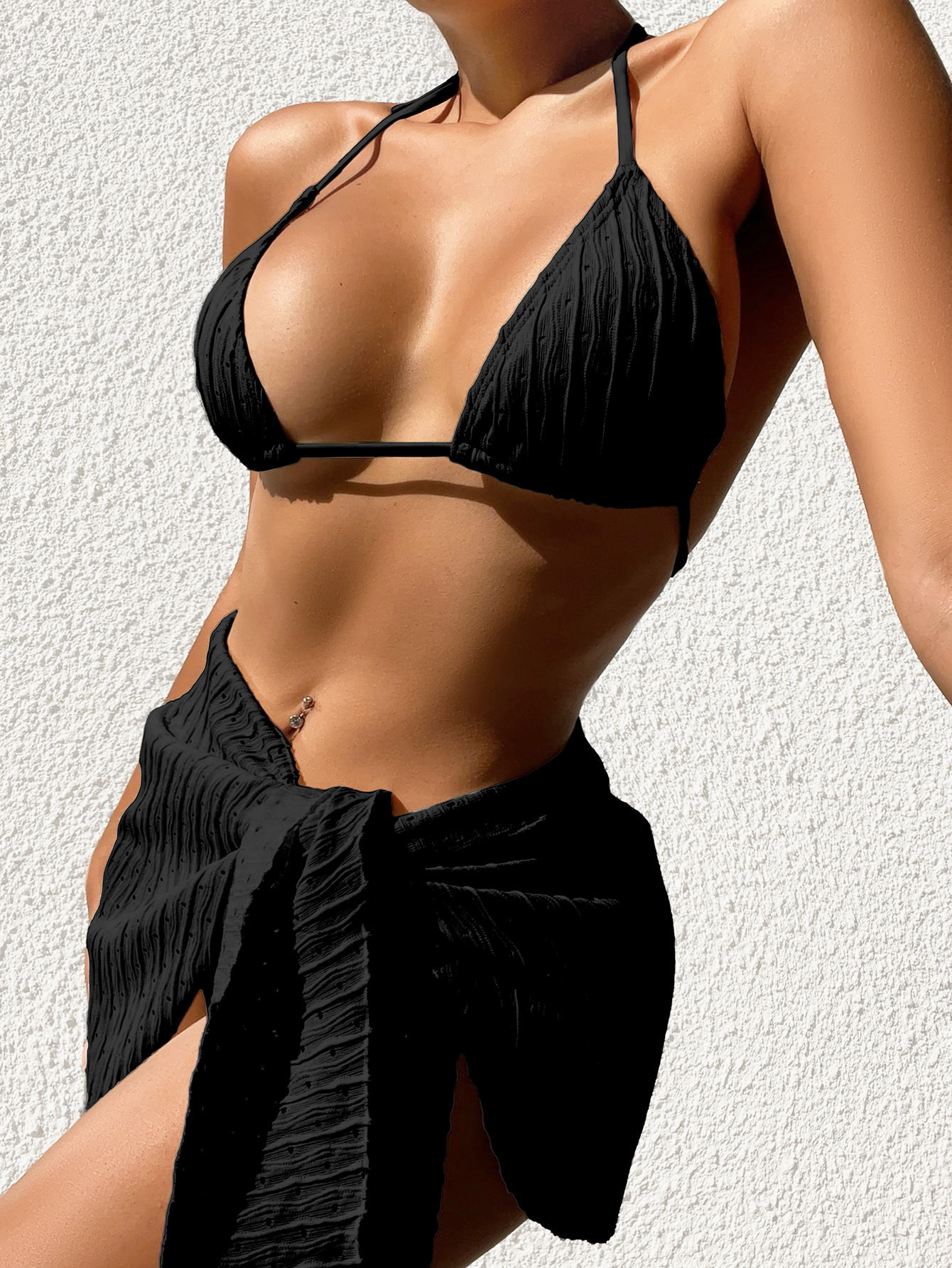
Swimwear is an important boutique category because it supports vacation shopping, beach trips, pool days, resort travel, cruises, and warm-weather events. Customers often shop for a complete beach look instead of a swimsuit alone. For retailers buying wholesale swimwear, the best assortment should combine attractive silhouettes, comfortable fits, useful coverage, and easy-to-style accessories.
A balanced swimwear collection should include bikinis, one-piece swimsuits, tankinis, swim bottoms, and cover-ups. Two-piece bikinis offer the most mix-and-match flexibility and can attract customers who want different top and bottom sizes or multiple styling options.
One-piece swimsuits provide more coverage and can appeal to customers who prefer a streamlined silhouette. Tankinis and swim dresses offer additional coverage while keeping a resort-ready look. Cover-ups, beach dresses, sarongs, and lightweight shirts can complete the outfit and create useful add-on sales.
Not every customer wants the same level of coverage or support. Triangle tops, bandeau tops, halter tops, underwire tops, and adjustable strap styles each create a different fit and appearance. High-waist bikini bottoms can offer more coverage through the waist, while cheeky and tie-side bottoms create a more revealing look.
One-piece swimsuits can range from classic scoop-neck styles to off-shoulder, cutout, belted, mesh-panel, and ruched designs. Boutiques should carry both simple and fashion-forward silhouettes so customers can shop according to comfort, body preference, and occasion.
Swimwear needs to look attractive while remaining secure during movement. Check removable pads, adjustable straps, underwire support, elastic recovery, lining, stitching, and closure quality. These details can strongly affect customer satisfaction.
For online selling, product descriptions should explain whether the item has padding, stretch, lining, adjustable straps, tie closures, or additional support. Clear information helps customers compare different styles and make more confident buying decisions.
Swimwear fabrics should provide stretch, shape recovery, and comfort when worn around water. Nylon-spandex, polyester-spandex, ribbed swim fabrics, textured materials, and mesh details can all support different design directions.
When reviewing wholesale swimwear, check whether the fabric feels secure without being too restrictive. The material should retain its shape and the lining should provide enough coverage for the intended style. Decorative details such as lace-up panels, ring hardware, ruffles, ruching, colorblock sections, and textured finishes can increase visual appeal.
Solid colors are easy to merchandise and can appeal to customers who want timeless swimwear. Black, white, navy, brown, olive, red, and neutral tones are useful foundation colors. These shades also make it easier to coordinate bikinis with cover-ups, beach dresses, sandals, and bags.
Prints can bring stronger seasonal energy. Floral, tropical, animal, stripe, tie-dye, polka-dot, and abstract patterns can work well for summer and vacation collections. Boutiques should balance bold prints with reliable solid colors and test statement patterns in smaller quantities.
Cover-ups are an important part of a complete swimwear assortment. Customers may want a lightweight shirt, crochet dress, sarong, kimono, mesh skirt, beach pants, or loose resort dress to wear from the beach to a café or hotel.
Cover-ups can also increase the average order value because they solve a practical styling need. Merchandise them next to matching swimwear or create vacation edits that combine swimsuits, cover-ups, hats, bags, and sandals.
Swimwear sizing can vary between styles, fabrics, and brands. Boutiques should review measurements for every product instead of relying on one general size assumption. Important details include bust, waist, hip, rise, cup coverage, torso length, and stretch level.
A broader size range can help the boutique serve more customers, especially when the assortment includes adjustable straps, tie-side bottoms, elastic waistbands, and flexible one-piece silhouettes. Accurate size charts and fit notes are essential for online swimwear sales.
Customers often shop swimwear for specific trips and events. Create collections for beach vacations, resort weekends, pool parties, cruises, honeymoon travel, tropical holidays, and everyday swimming. Occasion-based merchandising makes it easier for customers to find the right product.
Photos should show the front, back, side, lining, straps, closures, and important design details. Worn-on-body photos are helpful because they show coverage, fit, and proportion more clearly than a flat product image.
Swimwear can encourage repeat purchases because customers may want different colors, prints, coverage levels, and matching cover-ups for different trips. A shopper may buy a classic one-piece for swimming, a printed bikini for vacation photos, and a cover-up for resort styling.
The best wholesale swimwear assortment combines comfortable construction, flattering fits, useful coverage, seasonal colors, and complete beachwear styling. When boutiques plan swimwear around real customer occasions, the category becomes easier to merchandise and more valuable for repeat sales.
Hot Search: Wholesale Dresses Dear Fashion Wholesale Swimwear Sexy Club Dresses Wholesale Two Piece Sets
Wholesale Jumpsuits Wholesale Women's Plus Size Clothing Wholesale Womens Tops lovely wholesale 7 Plus Size Camouflage Dresses plus size sheer dress plus size leather lingerie plus size christmas lingerie plus size sequin romper plus size crotchless panties Wholesale Shorts wholesale denim jackets custom face swimsuit wholesale plus size clothing 4x 5x 6x green plus size lingerie army fatigue outfits wholesale loungewear bulk crop tops wholesale bodysuits custom one piece swimsuit wholesale gothic clothing plus size clothing 6x 7x wholesale plus size sexy black dress Black Leather Lingerie